Let's delve into how a bimetal thermometer operates within the realm of civil engineering laboratory research...
Materials Used:
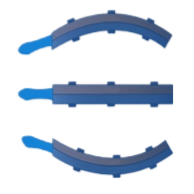
BiMetallic Strip
The bimetallic strip used in civil engineering laboratory research bimetal thermometers typically consists of two metals bonded together, such as brass and steel. Brass has a higher coefficient of thermal expansion compared to steel. This property allows the strip to bend in response to temperature changes.
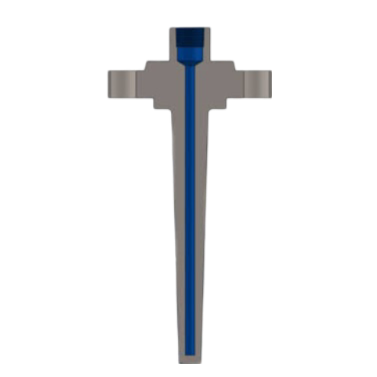
Protective Casing
To ensure durability and protection against environmental factors, the bimetal thermometer may be encased in a sturdy housing made of metal or plastic.

Dial/Guage
A dial or gauge is attached to the bimetal thermometer to display temperature readings. The movement of the indicator needle or pointer on the dial corresponds to changes in temperature.
Process Followed:
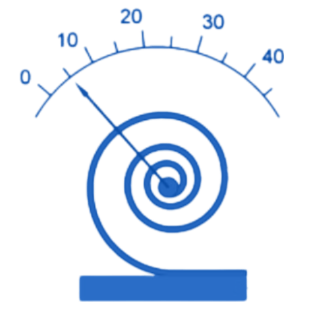
Principle of Operation
In civil engineering laboratory research, bimetal thermometers function based on the principle of thermal expansion. When exposed to temperature variations, the bimetallic strip bends due to the differential expansion of the two metals. For instance, if the temperature increases, the brass side of the strip expands more than the steel side, causing the strip to bend towards the brass side.
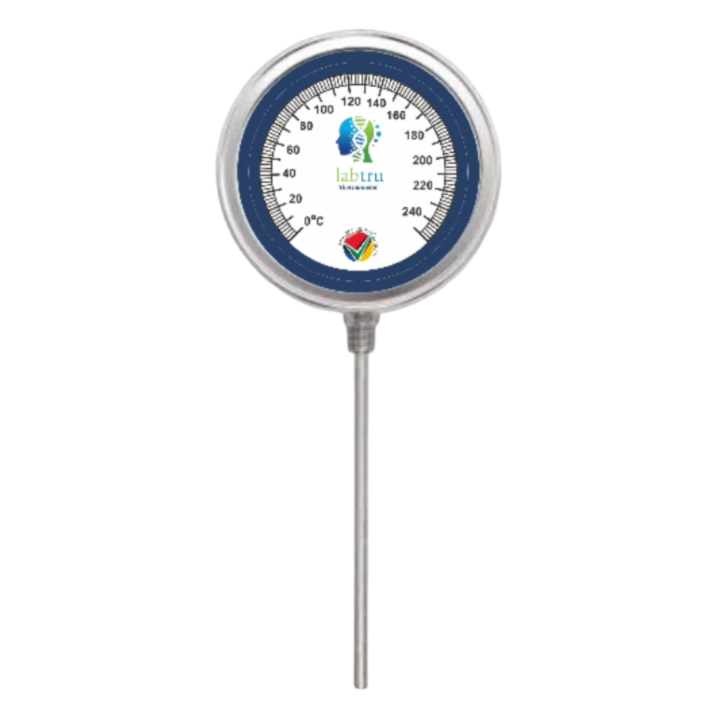
Mounting & Placement
The bimetal thermometer is strategically positioned within the civil engineering laboratory to monitor temperature changes accurately. It may be affixed to concrete specimens undergoing curing, embedded within soil samples during compaction tests, or installed in structural components subjected to environmental conditions.
Temperature Measurement
As the temperature fluctuates in the laboratory environment, the bimetal thermometer responds by bending the bimetallic strip. This bending motion is translated into movement of the indicator needle or pointer on the dial, providing real-time temperature readings.

Quality Control & Assurance
In construction projects, bimetal thermometers play a crucial role in quality control and assurance by ensuring that materials and structures are subjected to appropriate temperature conditions during testing and evaluation processes.

Data Collection & Analysis
Temperature data collected from bimetal thermometers are analyzed to evaluate the performance of construction materials and structural components under varying environmental conditions. This information aids in the design, optimization, and durability assessment of civil engineering projects.

Calibration & Maintenance
Regular calibration and maintenance of bimetal thermometers are essential to ensure accurate temperature measurements. Calibration may involve comparing the readings of the thermometer against a known reference source, while maintenance includes checking for any signs of damage or wear and tear.

 labtru™